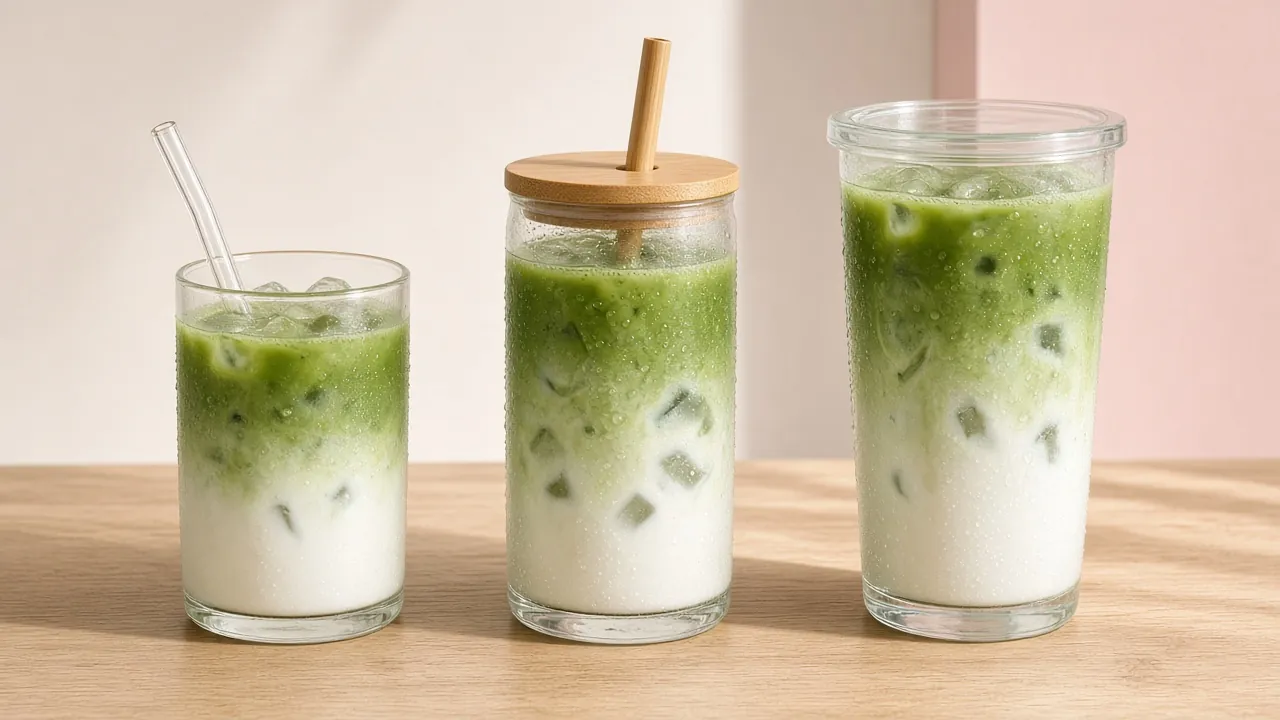
When does a glass work better than a bowl for preparing matcha?
The bowl is the traditional tool, and for a thin, frothy matcha it is hard to beat. But plenty of everyday drinks are easier, cleaner and quicker when you skip the bowl and work directly in a glass. Here is how to tell which situation you are in.
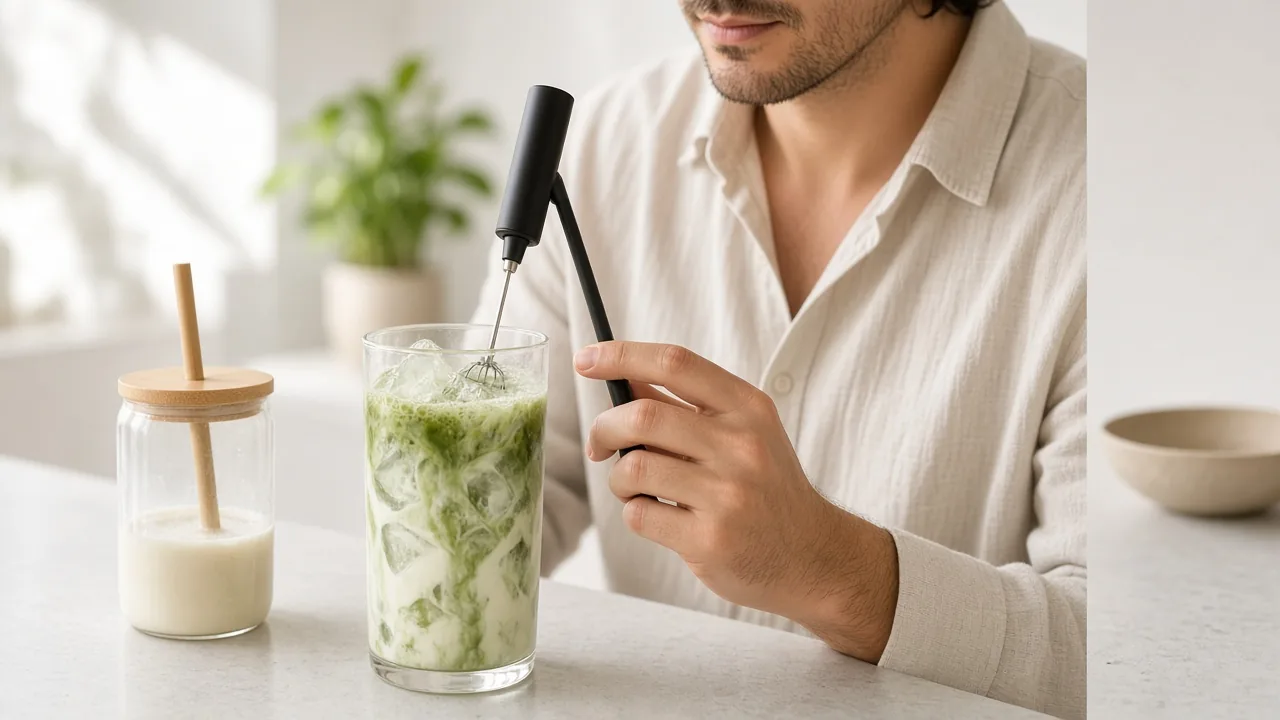
Two tools, two jobs
A bowl is a mixing vessel and a cup at once: wide, shallow, built so a bamboo whisk can travel freely. A glass is tall and narrow, built to hold volume, ice and layers. A matcha glass is not a lesser bowl — it simply solves different problems. If you are still choosing the glass itself, our guide to picking a glass covers capacity, borosilicate and lids; here we focus on when to use one instead of a bowl.
When the glass wins
Milk drinks and lattes
A latte is mostly milk: 200–300 ml for a small amount of matcha. Whisking a shot in a bowl and then pouring it means two vessels to wash and a few drips on the counter. In a 380–500 ml glass, you can add milk, then the matcha concentrate, and stir or froth in place. One container, no transfer.
Iced drinks
Ice needs height. A bowl cannot hold a handful of cubes plus liquid without overflowing, while a tall glass can. The cold also makes powder harder to dissolve, so preparing directly with a small electric frother inside the glass (or shaking a lidded tumbler) is often more reliable than whisking in a bowl and pouring onto ice.
Mornings in a hurry
If you prepare and leave within five minutes, a glass with a lid and straw is the practical option. You can carry it to your desk or the car without spilling, and there is no bowl waiting in the sink when you get home.
The office or a shared kitchen
Bamboo whisks and ceramic bowls are delicate and need drying space. A glass, a frother and a small jar for your dose fit in a drawer. That makes a glass the realistic choice for a work setup.
When you want to see the drink
Layers, colour, the moment the green meets the milk: a clear glass shows everything. For guests, that visual effect is part of the pleasure.
When the bowl still wins
- A thin, frothy matcha with water only. The fine, stable foam comes from a fast zigzag over a flat floor, and no glass shape allows that movement.
- A bamboo chasen. A traditional whisk needs width; in a glass, the tines hit the sides and break. If you use a chasen, whisk in a bowl.
- Thicker preparations. The slow kneading motion needs a wide, heavy vessel.
- A slower ritual. Holding a warm bowl in two hands is part of the experience for many people.
If you mostly drink matcha this way, look at our matcha bowl collection rather than a glass.
The hybrid approach
Many people use both: a bowl to whisk a smooth concentrate, and a glass to serve it. This is the best of each — perfect texture from the bowl, volume and ice in the glass. A bowl with a pouring spout makes the transfer clean. If you want fewer dishes, an electric frother in the glass is the simplest alternative, with a slightly less fine foam.
Making it work in a glass
- Start with a small amount of warm water. Even for an iced drink, dissolve the powder in 30–40 ml of water that is not cold. Powder clumps in cold milk.
- Sift first. A fine-mesh sifter over the glass removes most lumps before they form.
- Use the right tool. A handheld electric frother works well in a glass of at least 7 cm diameter. A bamboo whisk does not.
- Then add milk and ice. Pouring the concentrate over them, or them over the concentrate, both work; the first gives nicer layers.
- Rinse straight away. Matcha dries into a film on glass and on straws. A quick rinse avoids scrubbing later.
Which glass for this use?
- Around 380 ml: a standard latte with a bit of ice.
- Around 500 ml: generous iced drinks with plenty of ice.
- A lid and straw: essential if you carry your drink.
- Borosilicate: handles a warm concentrate followed by ice without the thermal shock risk of ordinary thin glass.
The short answer
Use a glass when milk, ice or mobility matter more than foam. Use a bowl when the foam itself is the point. And when you want both, whisk in the bowl and serve in the glass.
Quick answers
Can I use a bamboo whisk in a glass?
It is not recommended. The glass is too narrow for the zigzag motion, the tines hit the walls and break, and the foam stays coarse. Use a handheld frother in a glass, or whisk in a bowl and pour.
Is hot matcha in a glass a good idea?
Yes in borosilicate glass, which tolerates heat and temperature changes. Hold it by the top or use a sleeve, as glass walls get hot faster than thick ceramic.
Does matcha stain glass?
Not permanently, but it leaves a green film if it dries. Rinse the glass and straw right after drinking and wash with a bottle brush once a day.
Léo Matcha sells matcha accessories only — no matcha tea or powder. Use the matcha you already love.