
Chasen, 100 tines or electric: how each whisk type works and what it is for
The whisk is the one tool that decides whether your matcha is smooth and velvety or flat and gritty. This guide maps everything worth knowing — types, technique, care and choice — and sends you to a dedicated article for each question.
Why the whisk matters more than any other tool
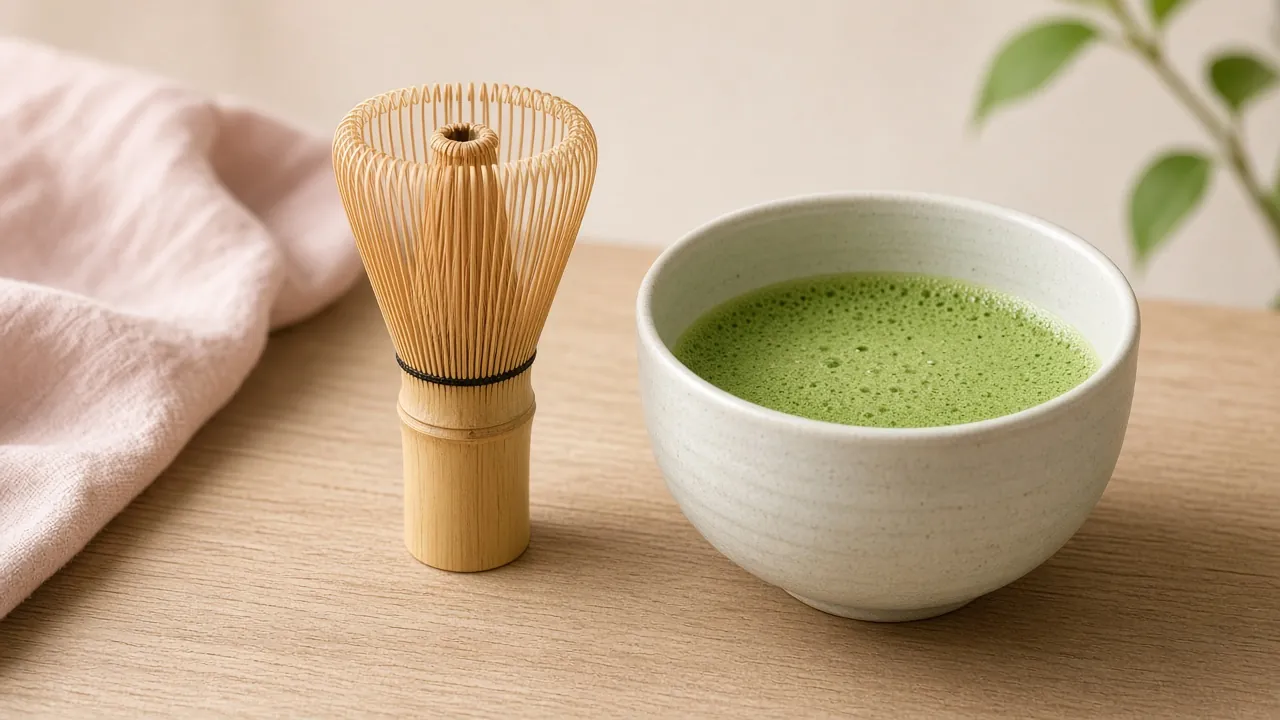
Matcha is not steeped like other teas: the powder is suspended in water. Without a proper whisk, it clumps, sinks and tastes bitter. A good whisk does three things at once: it breaks up every lump, it blends powder and water into a uniform liquid, and it folds in tiny air bubbles that create the soft micro-foam that makes matcha taste rounder. A spoon or a fork can only do the first one, badly.
That is why, if you only buy one accessory, it should be a whisk. Everything else — bowl, scoop, sifter, holder — makes the ritual easier and more pleasant, but the whisk is what changes the cup.
The traditional bamboo whisk (chasen)
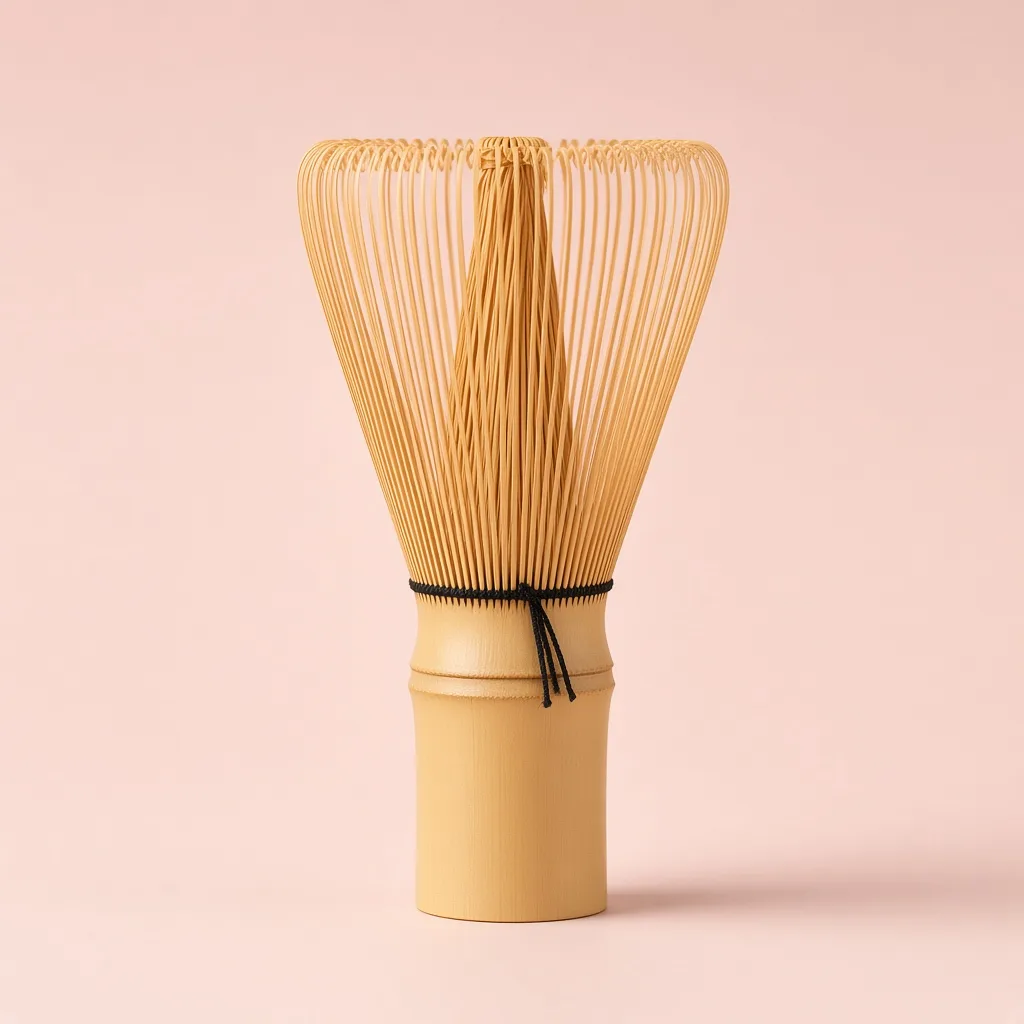
The chasen is carved from a single piece of bamboo, split into dozens of fine tines that are thinned, curled and tied by hand. Its flexibility is the secret: the tines bend against the bowl, move a lot of liquid with very little effort and stay gentle on the powder. If you are new to the vocabulary, our article on what a chasen is and how it is made explains the anatomy, the different bamboo types and what to look for in a well-made one.
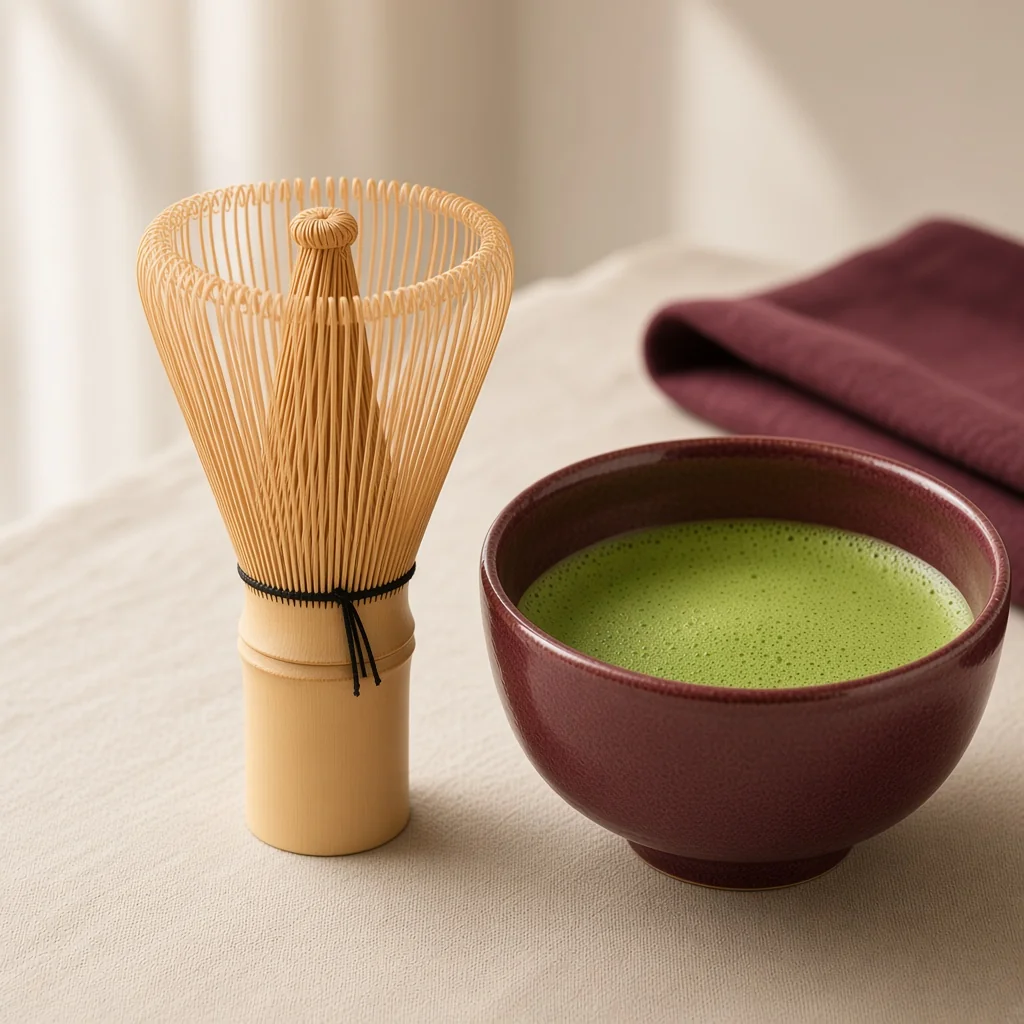
Our handmade bamboo matcha whisk is the classic everyday shape: easy to handle, forgiving for beginners and ideal for usucha, the light, frothy style most people drink.
How many tines? 80, 100 or 120
Tine count changes how a whisk behaves. Fewer, thicker tines are sturdier and suited to thicker preparations; more, finer tines create a denser, creamier foam faster. We compare them in detail in 80 vs 100 tine matcha whisk, including which one to pick for lattes and which one lasts longer.
Electric matcha whisks
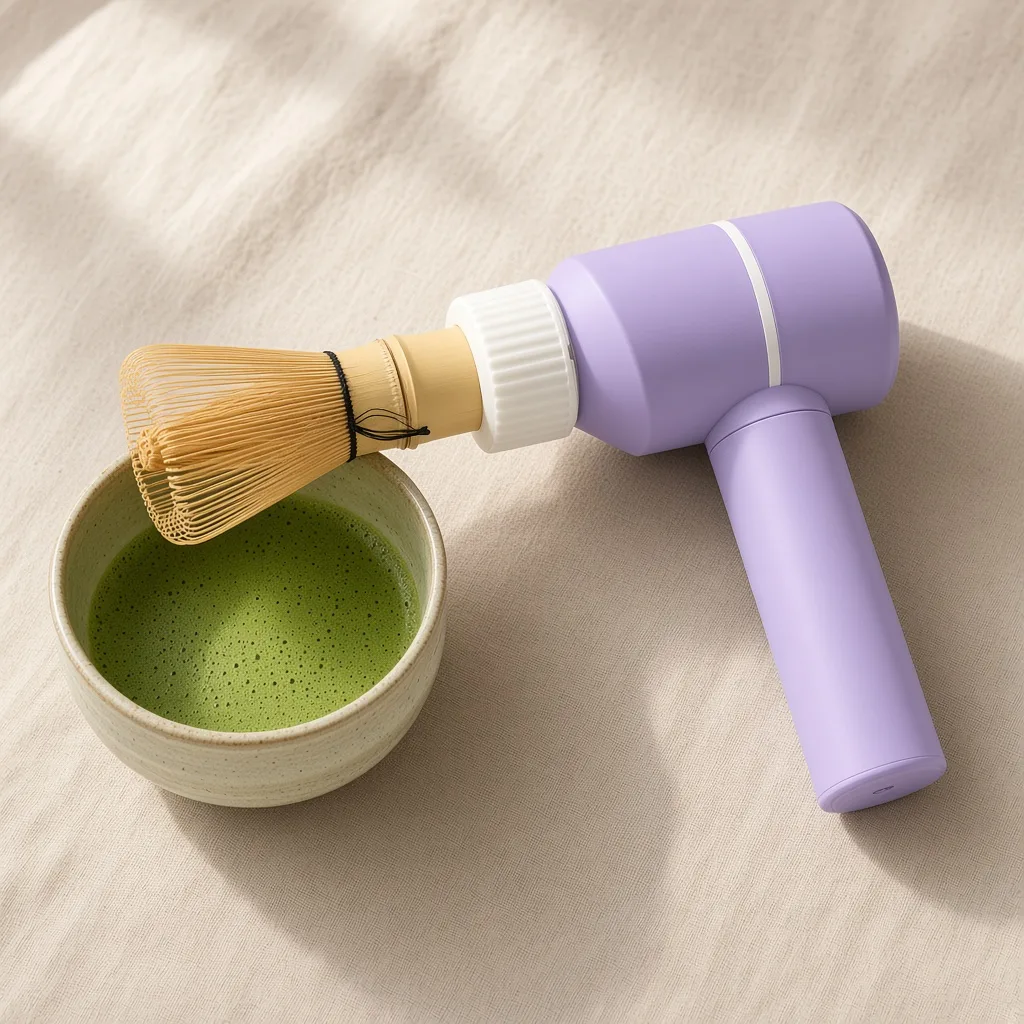
A handheld electric whisk is the modern answer for busy mornings, lattes and iced drinks. It will not replace the texture of a bamboo chasen for a traditional bowl, but it is fast, consistent and travels well. Read the electric matcha whisk guide for how to use one without splashing, how long to run it and how to clean the head. If you are hesitating between the two worlds, bamboo vs electric whisk puts them side by side on texture, speed, care and price.
Technique: getting real foam
Most "bad matcha" is a technique problem, not a tool problem. Water that is too hot, too much water at the start, or circular stirring instead of a quick zigzag all lead to big bubbles and bitterness. The step-by-step method — and the fixes for every common mistake — is in how to whisk matcha.
Care, drying and storage
A bamboo whisk is a natural object. Rinse it in warm water right after use, never use soap or the dishwasher, and let it dry upright in the open air. Follow these simple habits and a chasen lasts months. Our full routine is in how to clean, dry and store a bamboo whisk.
The single best thing you can do for its shape is to rest it on a holder. A whisk holder (kusenaoshi) keeps the tines open, lets air circulate and prevents mould — we explain why it is not just decoration.
How to choose your matcha whisk
Budget, how often you drink matcha, whether you prefer hot bowls or iced lattes, and how much time you have in the morning: these four questions decide between a classic chasen, a 100-tine model or an electric whisk. Our matcha whisk buying guide turns them into a simple decision, with the quality signs that separate a good bamboo whisk from a disposable one.
Still have a specific question (soaking, first use, lifespan, why tines break)? The matcha whisk FAQ answers the ones we hear most.
From whisk to full ritual
Once you have a whisk you love, the rest of the tools fall into place: a wide bowl to whisk in, a scoop to measure, a sifter against lumps, and a holder for the whisk. If you would rather get everything at once, have a look at the complete matcha kit guide.
When you are ready, all our whisks — bamboo, 100-tine and electric — are together in the matcha whisk collection. We sell tools only: they work with whatever matcha you already enjoy.
Quick answers
Do I really need a matcha whisk?
If you want smooth, foamy matcha, yes. A spoon cannot break up the fine powder or create foam; a whisk does both in about 20 seconds.
Bamboo or electric: which is better?
Bamboo gives the finest traditional foam for hot matcha; electric is faster and great for lattes and iced drinks. Many people own both.
How long does a bamboo matcha whisk last?
With daily use and good drying habits, usually 3 to 6 months, sometimes longer. Broken tines are normal wear, not a defect.
Should I soak my whisk before use?
Yes: dip the tines in warm water for a minute before whisking. It softens the bamboo so the tines bend instead of snapping.
Léo Matcha sells matcha accessories only — no matcha tea or powder. Use the matcha you already love.
Tools mentioned in this guide
Keep reading

What is a chasen? The bamboo matcha whisk explained
What a chasen is, how a bamboo matcha whisk is made, its parts (tines, knot, handle), bamboo types and how to recognise a well-made one.
Read the guide →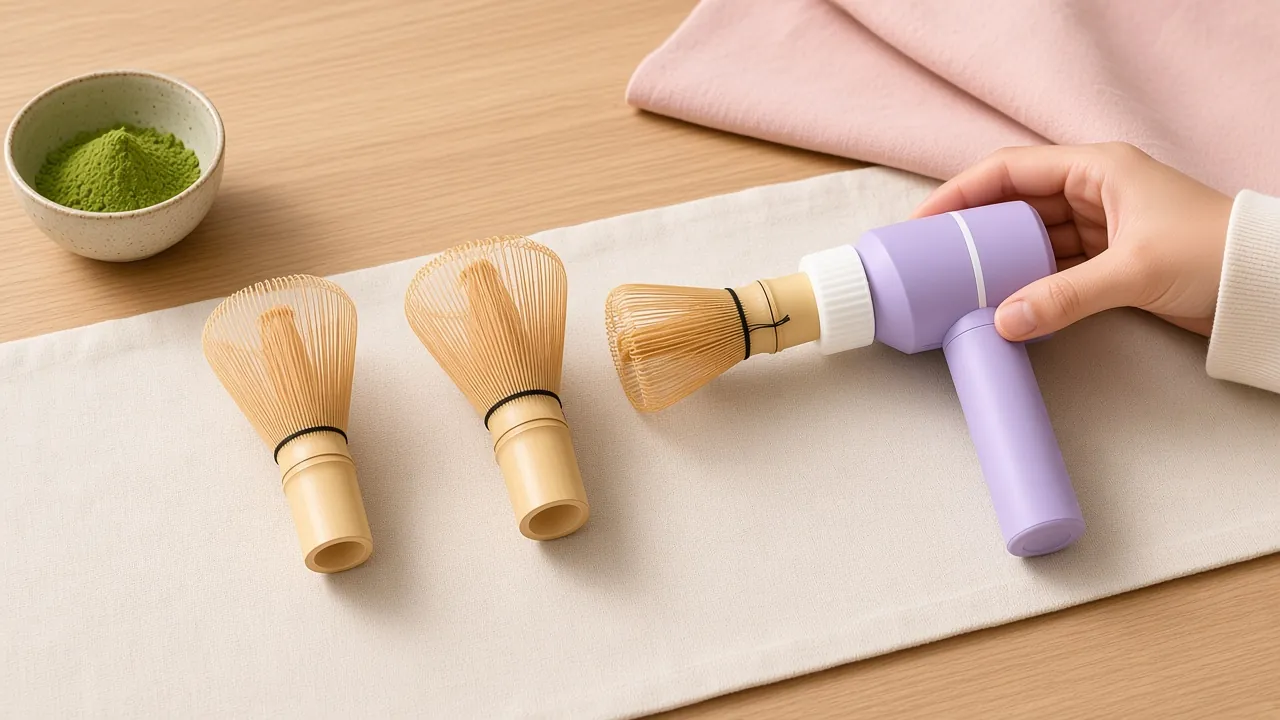
How to choose a matcha whisk: a buying guide
Buying a matcha whisk? Four questions to pick between a classic chasen, a 100-tine whisk and an electric one, plus the quality signs to check before you buy.
Read the guide →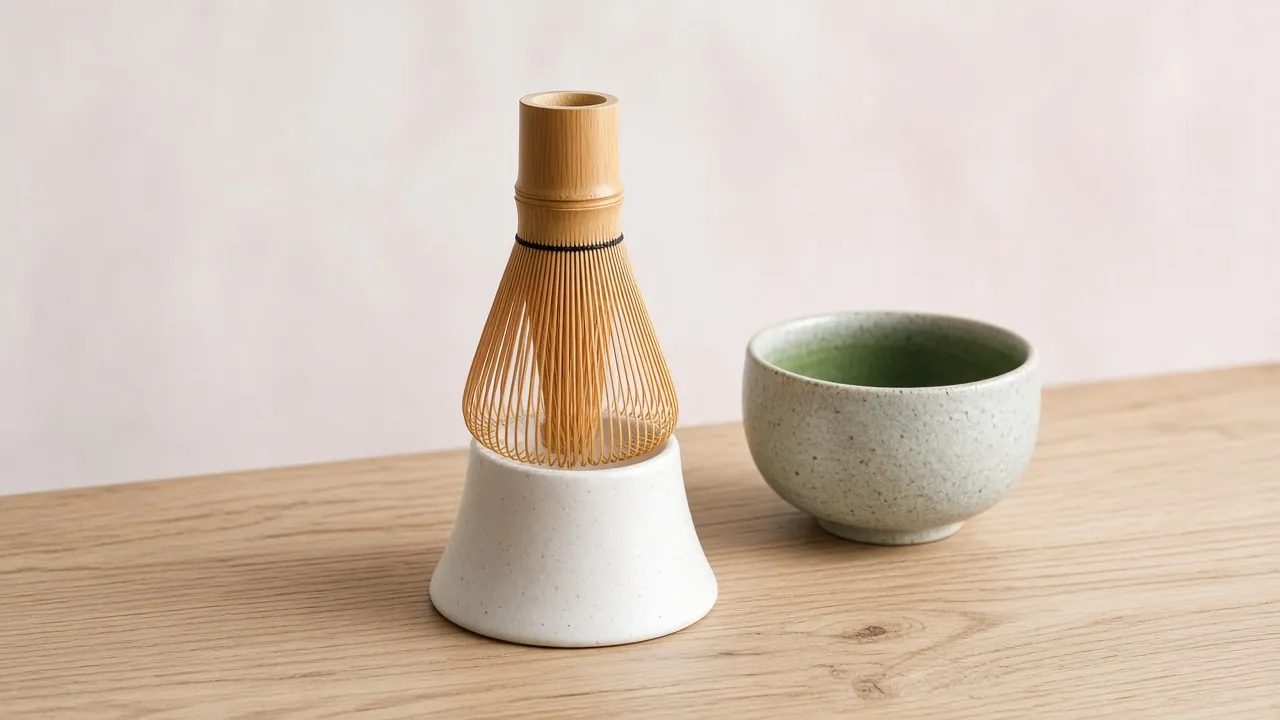
Why a whisk holder (kusenaoshi) matters
What a kusenaoshi is, why a matcha whisk holder keeps your chasen in shape, prevents mould and broken tines, and how to choose and use one.
Read the guide →